Surface hardness HRC 60–64, effective case depth 1.5–2.0 mm.
Larger diameters and lengths manufactured to customer drawing.
Standards: ISO 9182, DIN 9825, AFNOR, IT STD.
View all guide pillars and specifications: Guide pillars
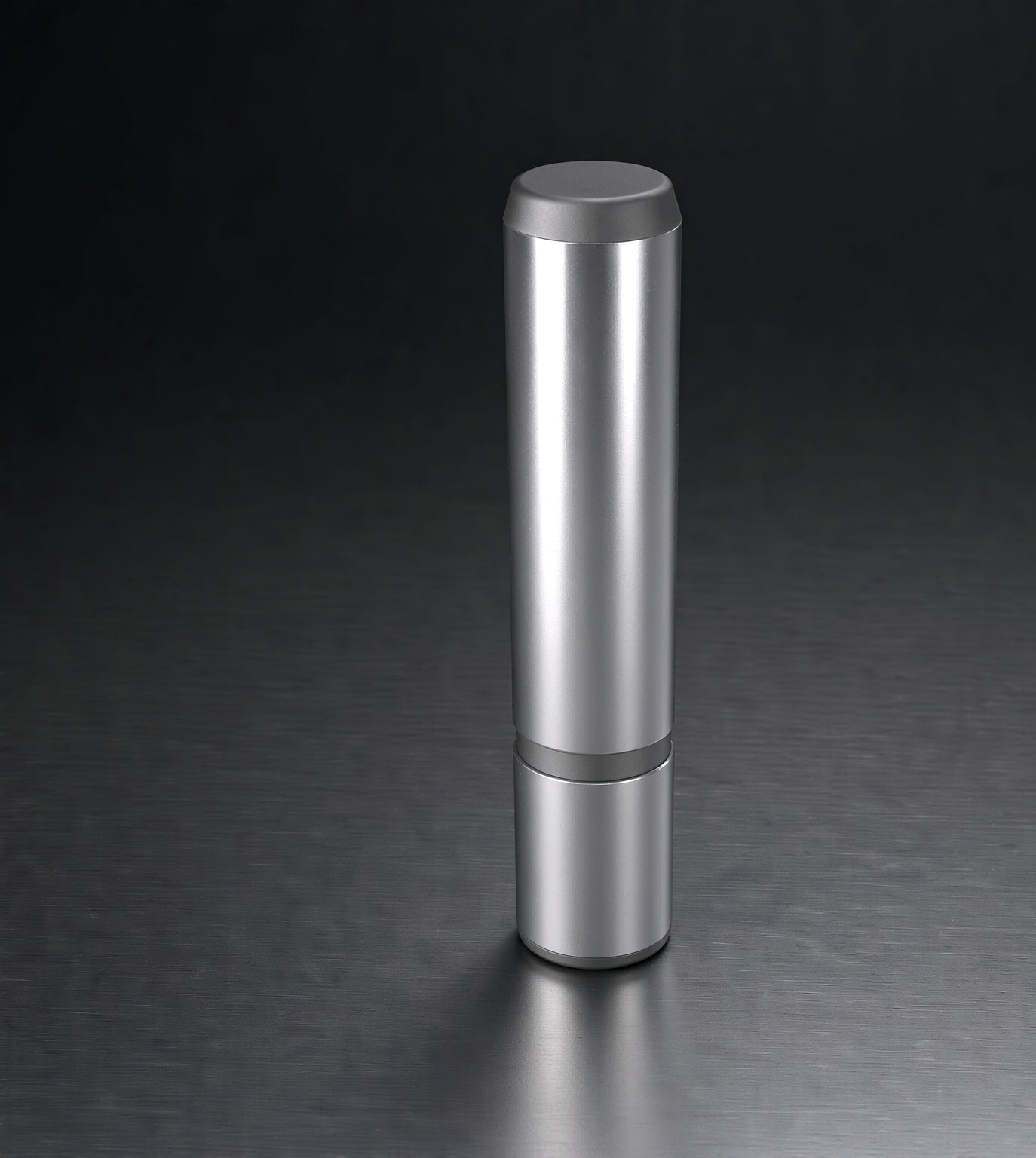
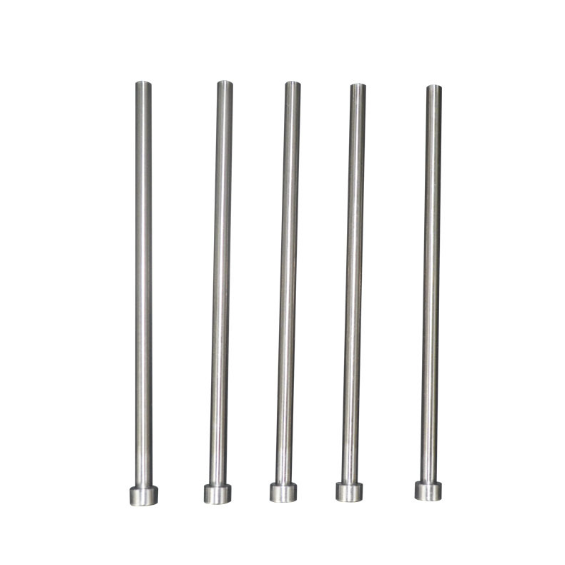
Guide pillar with a shoulder (collar) at one end. The shoulder provides a positive locating surface that controls the press-in depth and supports the pillar axially, eliminating the need for separate retaining elements.
Application: deep drawing dies, transfer dies, large stamping tools where shoulder location is required.
surface hardness HRC 60–64, effective case depth 1.5–2.0 mm.
Tolerance: guiding diameter h4 as standard, h3 available on request.
Geometric tolerance:
Roundness down to 0.003 mm, all grades per customer drawing
Cylindricity down to 0.005 mm, all grades per customer drawing
Concentricity down to 0.005 mm, all grades per customer drawing
Perpendicularity down to 0.002 / 100 mm, all grades per customer drawing
Surface finish: Ra 0.8 μm on guiding section (Ra0.4 available per request )
All tolerance grades manufactured to customer drawing
Standards: ISO 9182-2, DIN 9825, AFNOR, IT STD. Non-standard diameters and lengths manufactured to customer drawing.
View all guide pillars and specifications: Guide pillars
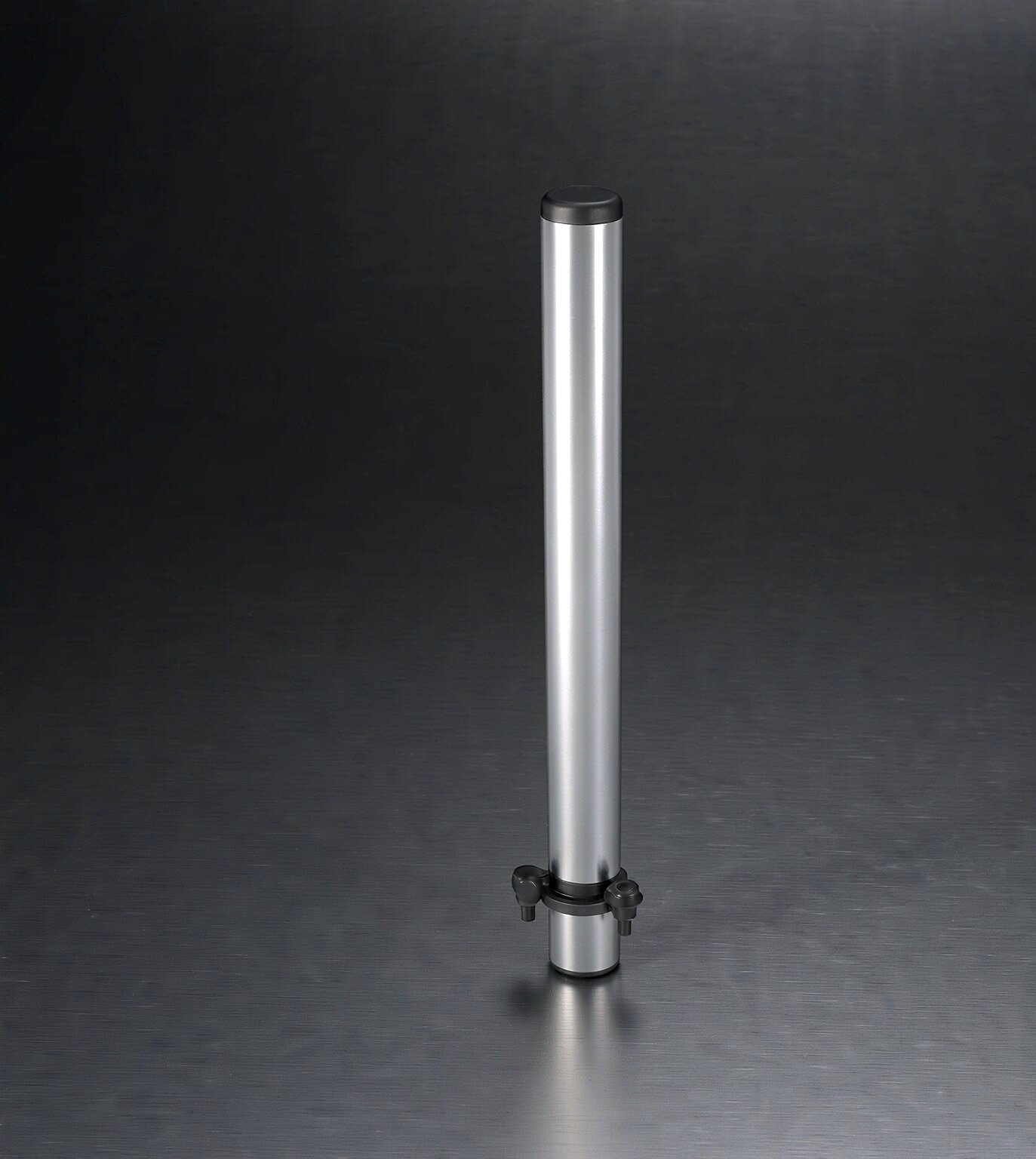
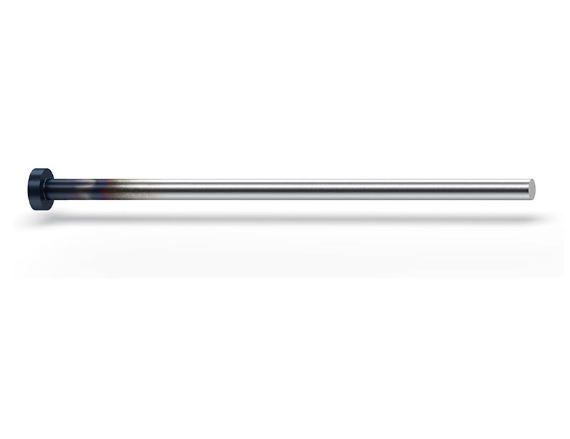
Straight guide pillar with an axial threaded hole at one end or both end.
The screw thread allows the pillar to be retained from the opposite side of the plate, making removal and replacement possible without dismantling the die set.
Application: dies where periodic pillar replacement is required, high-wear applications.
induction hardened, surface hardness HRC 60–64, effective case depth 1.5–2.0 mm.
Standards: ISO 9182-2, DIN 9825, AFNOR, IT STD. Non-standard diameters and lengths manufactured to customer drawing.
View all guide pillars and specifications: Guide pillars
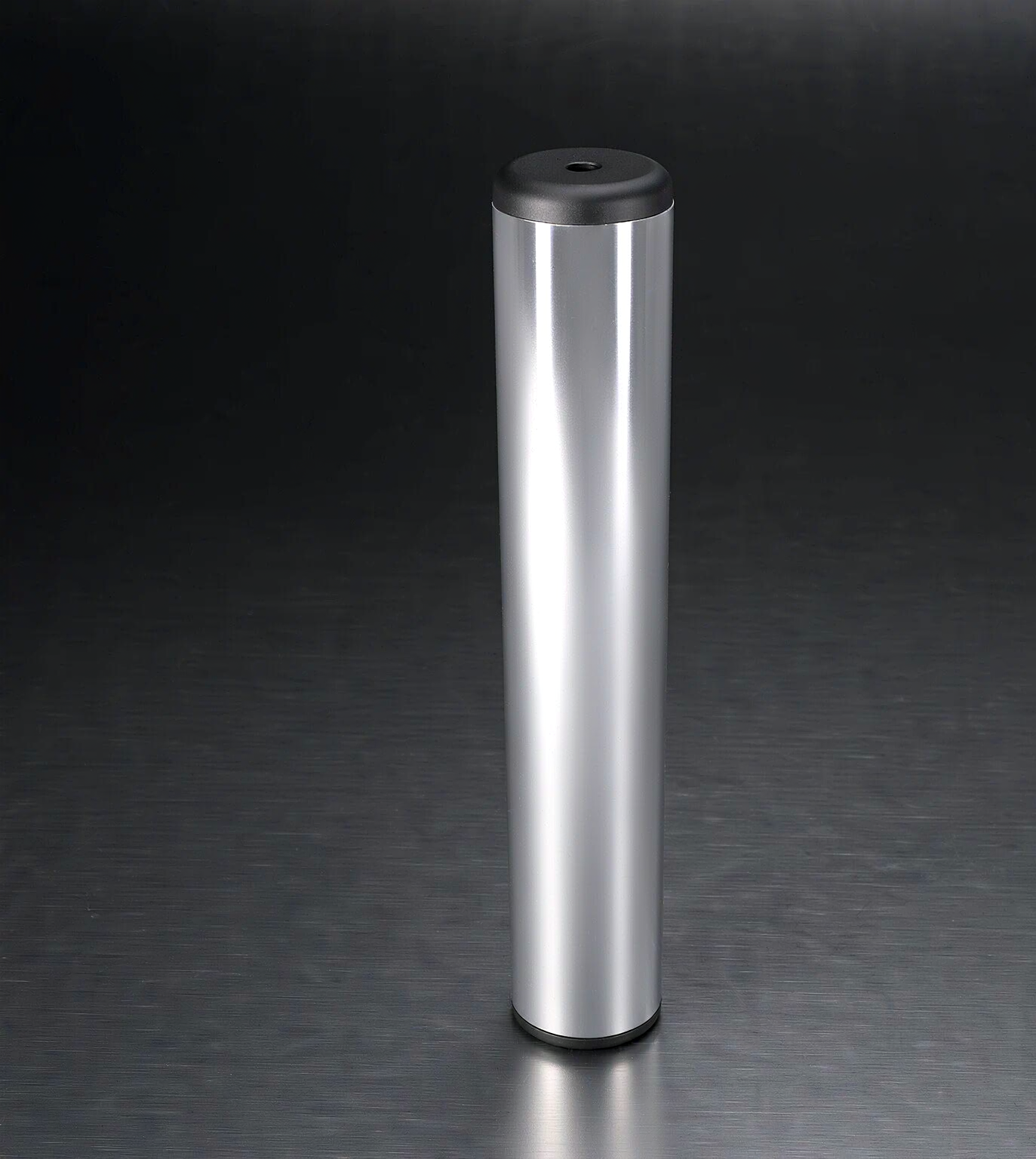
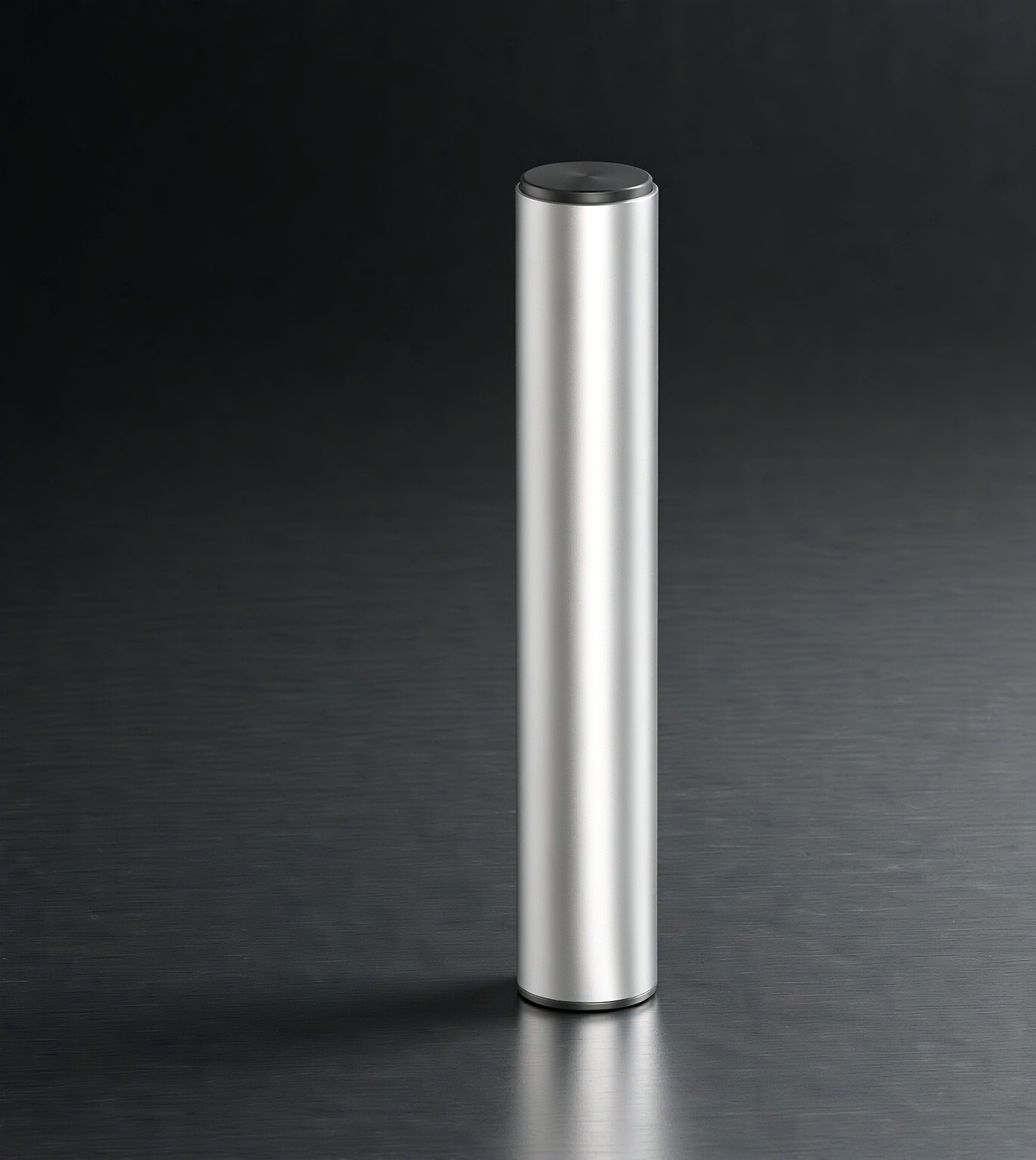
Straight guide pillars are pressed directly into the upper and lower die plates without a shoulder. The full cylindrical surface acts as the guiding section. Tolerances are h3 /h4 on the guiding diameter.
Application: stamping dies, progressive dies, die casting moulds.
Material: 100Cr6(1.3505), equivalent to Gr15 /SUJ2 /AISI52100, induction hardened
surface hardness HRC 60–64, effective case depth 1.5–2.0 mm.
Standards: ISO 9182-2, DIN 9825, AFNOR, IT STD.
Non-standard diameters and lengths manufactured to customer drawing.
View all guide pillars and specifications : guide pillars
What is an SKD61 nitrided centre pin? Why is it so incredibly durable? 💥 First off, don’t be intimidated by the name – SKD61 is actually a Japanese standard hot-work tool steel (equivalent to China’s 4Cr5MoSiV1), renowned for its exceptional resistance to high temperatures and wear! 🎯
Its ‘secret weapon’ is the ‘nitriding treatment’! Simply put, it involves infusing nitrogen atoms into the pin’s surface at high temperatures, forming a dense nitrided layer (approximately 0.1–0.2mm thick). This ‘armour’ allows the pin to maintain its hardness even in temperatures exceeding 600°C, maximising its resistance to mould adhesion and wear! 🔥
Thus, SKD61 nitrided ejector pins are no ordinary components—they are steel warriors engineered for demanding injection moulding/die-casting environments, particularly suited for forming high-temperature, sticky materials like ABS, PC, and PA!
How to choose from common sizes 7–20? One chart reveals the perfect fit! 📋 Don’t mistake ‘7/8/9…20’ for gibberish! They denote the ejector pin diameter (in mm). Larger sizes offer greater load capacity, but must be balanced against mould space and pressure requirements.
Small sizes (7–10mm): Ideal for compact precision moulds like mobile phone cases or small appliance housings where space is limited and accuracy is paramount. Opt for 7mm or 8mm for lightweight flexibility, rapid response, and minimal deformation.
Medium sizes (11-15mm): The most mainstream range! Widely used in mass production for appliances, automotive interiors, toys, etc. 12mm and 14mm are the ‘golden sizes’, balancing strength and installation space for the best value.
Large sizes (16-20mm): Used for large injection-moulded parts like car bumpers, appliance housings, and industrial components. These ejector pins must withstand greater thrust forces; sizes 16mm and above are essential to prevent bending or fracture! ⚠️
💡 Tip: When selecting, consider not only diameter but also ensure compatibility with the mould cavity. Allow a clearance of 0.05–0.1mm to prevent jamming or friction-induced overheating.
Nitriding ≠ Universal Solution! These Critical Parameters Determine Lifespan ⏰ Do you assume that simply ‘nitriding’ suffices? Wrong! The true core lies in the nitriding layer depth, hardness, and uniformity.
✅ High-quality nitriding: Nitriding layer depth ≥0.15mm, surface hardness Hv1000+, free from cracks and bubbles, capable of maintaining stability after over 100,000 cycles.
❌ Substandard nitriding: Layer too thin (<0.1mm), insufficient hardness (
🔍 How to judge? Request third-party test reports (e.g., metallographic analysis) from suppliers, focusing on nitrided layer cross-sections and hardness test data. Don’t settle for vague claims like ‘We’ve nitrided it’!
Pitfall avoidance guide: 3 critical points 90% overlook! 🚨 1️⃣ Don’t focus solely on price! Cheap SKD61 nitrided pins may use substandard steel or skip crucial processes, proving costly in the long run. Budget per pin should be 1.2~4usd (size dependent); anything below 0.7usd is generally unreliable.
2️⃣ Mind the fit tolerances! The clearance between the pin and guide sleeve must be precise—typically H7/g6 or H7/f7 fits are recommended. Otherwise, you’ll get stuttering operation, excessive heat, and shortened mould life.
3️⃣ Inspect the surface finish! Quality nitrided pins have a matt silver-grey surface with no visible scratches or oxidation discolouration; If blackened or flaking, the treatment process is substandard – reject outright!
Conclusion: Selecting based on requirements is the true money-saver! 💰 To summarise: SKD61 nitrided ejector pins are the standard choice for high-demand injection/die-casting moulds. Selection hinges on three factors: dimensional fit, nitriding quality, and tolerance precision. Cease blindly purchasing the ‘largest size’ or ‘cheapest option’!
📌 Recommended pairing logic:
Small precision components → 8mm–10mm SKD61 nitrided ejector pins
Medium-sized mass-produced parts → 12mm–14mm (cost-effective primary choice)
Large heavy-duty components → 16mm and above (verify nitrided layer thickness meets standards)
Remember: Choosing the right model isn’t about spending more, but about fewer part replacements, less downtime, and reduced rework—that’s the true meaning of ‘cost reduction and efficiency enhancement’!
Type A ejector pins, manufactured from hardened and nitrided H13 special steel, combine wear resistance and the necessary elasticity to prevent breakage. Material: Special hot-work steel with approximately 150 kg/mm² tensile strength (ISO 1.2344 / AISI H-13) Standard: DIN1530-A/ISO 6751 Execution: Ground, hot-forged head. Tolerance: Shank g6. Hardness: – Surface: >=950 HV (approx. 70 HRC) in nitrided options – Core: >= 1400 N/mm² (approx. 45 HRC) Finish: Polished